Mrsa Methicillin-resistant Staphylococcus Aureus Infections and Treatment by Manal M Baddour Review
-
These leaner are spread past having direct contact with an infected person, past using a contaminated object, or by inhaling infected droplets dispersed by sneezing or coughing.
-
Peel infections are common, but the bacteria can spread through the bloodstream and infect distant organs.
-
Pare infections may cause blisters, abscesses, and redness and swelling in the infected surface area.
-
The diagnosis is based on the appearance of the skin or identification of the leaner in a sample of the infected material.
-
Thoroughly washing the hands tin can assistance forestall spread of infection.
-
Antibiotics are chosen based on whether they are likely to exist effective against the strain causing the infection.
Staphylococcus aureus is present in the nose (usually temporarily) of near xxx% of healthy adults and on the peel of most xx%. The percentages are college for people who are patients in a hospital or who work there.
The bacteria tin can spread from person to person by direct contact, through contaminated objects (such as gym equipment, telephones, door knobs, idiot box remote controls, or elevator buttons), or, less oftentimes, by inhalation of infected droplets dispersed by sneezing or cough.
Carriers are people who accept the bacteria but do not have any symptoms caused past the bacteria. Carriers can motility the bacteria from their nose to other body parts with their hands, sometimes leading to infection. People who are hospitalized or work in a hospital are more likely to be carriers.
Staphylococcus aureus infections range from mild to life threatening.
The most common staphylococcal infections are
Still, the bacteria can travel through the bloodstream (chosen bacteremia Bacteremia Bacteremia is the presence of bacteria in the bloodstream. Bacteremia may result from ordinary activities (such as vigorous toothbrushing), dental or medical procedures, or from infections ... read more ) and infect almost any site in the body, specially eye valves (endocarditis Infective Endocarditis Infective endocarditis is an infection of the lining of the heart (endocardium) and usually also of the heart valves. Infective endocarditis occurs when bacteria enter the bloodstream and travel... read more 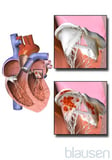 ) and bones (osteomyelitis Osteomyelitis Osteomyelitis is a bone infection usually caused by bacteria, mycobacteria, or fungi. Bacteria, mycobacteria, or fungi can infect basic by spreading through the bloodstream or, more oft, by... read more ).
The bacteria also tend to accumulate on medical devices in the body, such every bit artificial heart valves or joints, eye pacemakers, and catheters inserted through the skin into blood vessels.
Sure staphylococcal infections are more likely in certain situations:
-
Bloodstream infections: When a catheter that is inserted in a vein has remained in place for a long time
-
Endocarditis: When people inject illegal drugs or accept an bogus heart valve or when a catheter inserted in a vein is infected
-
Osteomyelitis: When Staphylococcus aureus spreads to the bone from an infection in the bloodstream or from an infection in nearby soft tissue, as may occur in people with deep pressure sores or foot sores due to diabetes
Certain conditions increase the chance of getting a staphylococcal infection:
-
Tumors
-
A transplanted organ Overview of Transplantation Transplantation is the removal of living, functioning cells, tissues, or organs from the torso and then their transfer back into the same body or into a unlike body. The almost common type of... read more , an implanted medical device (such as artificial heart valves Repairing or replacing a middle valve Eye valves regulate the flow of blood through the heart'due south four chambers—ii small-scale, round upper chambers (atria) and two larger, cone-shaped lower chambers (ventricles). Each ventricle has... read more than
 , joints Hip replacement Hip fractures may occur in the round upper end (head) of the thighbone, in the narrow part of the thighbone just beneath the head (neck), or in the bumps in the broader expanse just below the neck... read more , or center pacemakers Artificial pacemakers Aberrant eye rhythms (arrhythmias) are sequences of heartbeats that are irregular, as well fast, too tiresome, or conducted via an abnormal electrical pathway through the heart. Heart disorders are... read more
 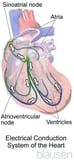 ), or a catheter inserted into a vein for a long time
 -
An open wound or sore
-
Chronic skin disorders
-
Surgery
-
Drugs, such as corticosteroids, drugs that suppress the immune arrangement (immunosuppressants), or cancer chemotherapy
-
Radiation therapy
-
Injection of illegal drugs
-
Newborns and breastfeeding mothers
Whether the bacteria are resistant and which antibiotics they resist often depend on where people got the infection: in a hospital or other health care facility or outside of such a facility (in the customs).
MRSA strains are common when infection is acquired in a health care facility (called infirmary-acquired infection). Some strains of MRSA cause infections that are acquired outside of a health intendance facility (called customs-acquired infection), including mild abscesses and skin infections. The number of these community-acquired infections is increasing.
Skin infections due to Staphylococcus aureus can include the following:
All staphylococcal peel infections are very contagious.
Bloodstream infection is a common cause of death in people with severe burns. Symptoms typically include a persistent high fever and sometimes shock.
Osteomyelitis causes chills, fever, and bone pain. The skin and soft tissues over the infected os become red and swollen, and fluid may accumulate in nearby joints.
-
For peel infections, a doctor's evaluation
-
For other infections, culture of blood or infected body fluids
Staphylococcal skin infections are usually diagnosed based on their appearance.
People can aid prevent the spread of these bacteria by always thoroughly washing their hands with lather and water or applying an booze-based hand sanitizer.
Some doctors recommend applying the antibiotic mupirocin inside the nostrils to eliminate staphylococci from the nose. However, because overusing mupirocin tin lead to mupirocin resistance, this antibiotic is used only when people are probable to get an infection. For case, information technology is given to people before certain operations or to people who live in a household in which the pare infection is spreading.
If carriers of staphylococci need to have sure types of surgery, they are often treated with an antibiotic before the surgery.
People with a staphylococcal skin infection should not handle food.
In some health care facilities, people are routinely screened for MRSA when they are admitted. Some facilities screen simply people who are at increased of getting a MRSA infection, such as those who are virtually to have certain operations. Screening involves testing a sample taken from the nose with a cotton swab. If MRSA strains are detected, people are isolated to prevent spread of the bacteria.
-
Antibiotics
-
Sometimes surgical removal of infected os and/or foreign material
Infections due to Staphylococcus aureus are treated with antibiotics. Doctors try to determine whether the leaner are resistant to antibiotics and, if and so, to which antibiotics.
Infection that is caused in a infirmary is treated with antibiotics that are effective confronting MRSA. They include vancomycin, linezolid, tedizolid, quinupristin plus dalfopristin, ceftaroline, telavancin, or daptomycin. If results of testing afterward indicate that the strain is susceptible to methicillin and the person is not allergic to penicillin, a drug related to methicillin, such as nafcillin or oxacillin, is used. Depending on how severe the infection is, antibiotics may be given for weeks.
MRSA infection tin exist acquired outside of a health care facility. The customs-caused MRSA strains are usually susceptible to other antibiotics, such equally trimethoprim/sulfamethoxazole, clindamycin, minocycline, or doxycycline, as well as to the antibiotics used to treat MRSA infections acquired in the hospital.
Mild skin infections due to MRSA, such equally folliculitis, are usually treated with an ointment, such as ane that contains bacitracin, neomycin, and polymyxin B (available without a prescription) or mupirocin (available past prescription but). If more than an ointment is required, antibiotics constructive against MRSA are given by mouth or intravenously. Which antibiotic is used depends on the severity of the infection and the results of susceptibility testing.
If an infection involves bone or strange textile in the body (such as heart pacemakers, bogus heart valves and joints, and blood vessel grafts), rifampin and maybe some other antibiotic are sometimes added to the antibiotic regimen. Unremarkably, infected bone and strange material has to exist removed surgically to cure the infection.
Abscesses, if present, are usually drained.
Staphylococcus aureus produces an enzyme called coagulase. Other species of staphylococci do not and thus are called coagulase-negative staphylococci. These bacteria normally reside on the skin of all healthy people.
These bacteria, although less dangerous than Staphylococcus aureus, can cause serious infections, commonly when caused in a infirmary. The bacteria may infect catheters inserted through the pare into a claret vessel or implanted medical devices (such equally heart pacemakers or bogus eye valves and joints).
These leaner are often resistant to many antibiotics. Vancomycin, which is constructive confronting many resistant bacteria, is used, sometimes with rifampin. Medical devices, if infected, ofttimes must be removed.
Source: https://www.msdmanuals.com/en-jp/home/infections/bacterial-infections-gram-positive-bacteria/staphylococcus-aureus-infections
0 Response to "Mrsa Methicillin-resistant Staphylococcus Aureus Infections and Treatment by Manal M Baddour Review"
Post a Comment